Last week I taught a class for Girl Develop It RDU to introduce Drupal to people who have never used it before.
It might not make sense without my brilliant explanations, but you can see my presentation here.


community application of technology for public benefit
Last week I taught a class for Girl Develop It RDU to introduce Drupal to people who have never used it before.
It might not make sense without my brilliant explanations, but you can see my presentation here.

A lot of people (well certain people) have been fussing about Twitter co-founder Jack Dorsey returning to the company as it’s new CEO. While I think he’ll easily be better than his predecessor Dick Costolo, I see no cause to celebrate.
The magic in Twitter has always been the connections between people and the ability to grow and connect communities of people. The Arab Spring is the most famous and impactful example of this, but “Black Twitter” is a more current illustration. It’s a large and decentralized community which is having a real impact on people’s lives through connection, cultural critique, and shining a light on police brutality via #BlackLivesMatter.
Today I followed a link posted by an old Twitter friend. It was a collection of reactions of “Twitter influencers” to Jack’s return. They were all white, a couple were my friends. Responses ranged from “we’ll see” to “Jack is my BFF.” There was not a single concern raised. It should come as no surprise that all of the white, male CEOs of Twitter were hired by a board which is itself nearly all white men (with the exception of a few Asian men and one very powerful woman).
Twitter has been making moves to try to compete with media companies (and Facebook) by pushing big news and events, memes that trend via their mysterious algorithm, and celebrity tweeters. This ground has been covered and there will always be someone who does that better than them. Twitter’s unique value proposition is the ability to find and directly connect with real people who you don’t already know but who add value to your life. To be a participant in a movement (whether it’s for democracy or your favorite TV show) rather than just a consumer. I have rarely seen Twitter’s corporate policies show that they understand or appreciate this value. In addition, their continuing lack of interest in doing anything serious about the pervasive abuse of women online further shows that they just don’t care about us, the users that give their platform meaning.
So I wrote a few tweets about this, but it’s hard to convey the complexity and the importance of this in 140 characters so I wanted to expand in this blog post. If you share my concerns, I’d appreciate a retweet or other show of solidarity.
Dear #BlackTwitter, I hope you are thinking abt other platforms & critical mass, Twitter's leadership does't understand or value community.
— Ruby of Manocide (@Ruby) October 21, 2015
This self-congratulatory collection of all-white "Twitter influencers" loving on @jack is just one case in point: https://t.co/cVjHdMqwsu
— Ruby of Manocide (@Ruby) October 21, 2015
Also to the many communities that have organized for democracy & freedom via Twitter. These ppl don't care abt you. https://t.co/AOYAH66Kfq
— Ruby of Manocide (@Ruby) October 21, 2015
 We held another great NCTech4Good hybrid unconference last week. I especially appreciated the other organizers who displayed teamwork above and beyond the call of duty.
Here are a few fun pictures by other folks. You can find more at twitter.com/search?q=nct4g and learn more about it in my previous blog post.
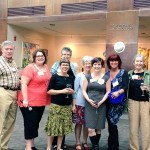
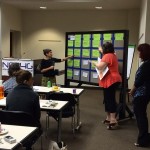
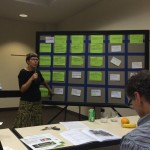

Facilitating the 2014 NCTech4Good Unconference
It’s been a little while since I posted about this, but I have been continuing to facilitate NCTech4Good’s hybrid unconference annually since 2011. Tomorrow is our 2015 event!
A lot of people still don’t know what “unconference” means, so I get excited about spreading the gospel. I never fail to have people who looked at me skeptically in the morning come up to me afterward to say how much they loved it and that they will suggest their own organization or community try unconferencing.
Please read my blog post I <3 Unconferences that explains the history and how they work. NCT4G is a simplified hybrid of traditional and “open space” (ie: unconference) event so I will explain our unique methodology here.
Before the conference:
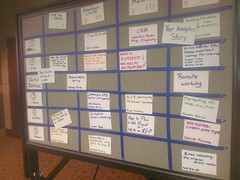 At the conference:
As you can tell, I am very skeptical of the whole idea of messing with unconference process, and I wasn’t completely sure it would work at first. But it has a resounding success for several years in a row and everyone came away satisfied. This year we’ll be doing the same and I expect it to go even better. If you are in central North Carolina, I hope to see you there!
If you’ve ever heard me talk about network-centric strategy, then you’ll appreciate this:
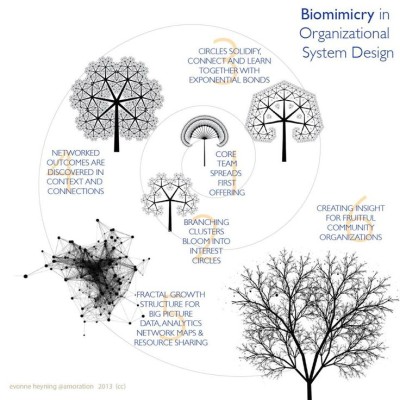
Thanks to the always-inspirational Evonne Heyning for sharing this.
 In the past year I’ve been getting involved with my local chapter of a wonderful organization called Girl Develop It. They host social/networking events as well as programming classes. At their Code & Coffee I have found help for a sticky Javascript problem, gotten career tips, and helped others learn more about open source software. I took their Git class a few months ago, and now I use it at work every day! So when they asked me to lead a class for GDI RDU I was honored and happy to help.
This weekend I will be teaching a class on advanced WordPress Theming. Fortunately, I am able to utilize the wonderful curriculum developed by Tracy Levesque. So after thoroughly reviewing and slightly updating the slides (and making sure all the software on my own site was up to date, oops) I am ready to go!
If you want to follow along, I’ve posted the presentation here.
I usually enjoy small tech conferences, but I was still surprised at what a good experience I had at WordCamp Raleigh today. It started out on a great note when I checked in and learned that they had t-shirts in women’s sizes as well as the ubiquitous “unisex.” This really made me feel like I belonged, even though I only knew about a half-dozen people there.
Most of the sessions were either a little beyond my abilities or a little elementary for me, but I still got something out of every one. A few times I followed the unconference Rule of Two Feet and moved to a different session. I especially appreciated the speakers that shared URLs for their presentations at the start so that I could follow along easily from my tablet.
Here are some of the great talks I saw today:
I’m looking forward to returning to Raleigh tomorrow for another fun day of learning with and from my fellow geeks.
UPDATE: None of the presenters I saw on the second day had made their slides available online, but they claim they are coming soon to the Wordcamp site.
I’m very proud of some work I’ve been doing on the Drupal site that I manage at work. Here’s a blog post I wrote about some of the newest features:
Today I am excited to officially launch several new features on the HASTAC web site, including Collections, Similar Content, Knowledge Base, and more. I think these additions will do a lot to help people connect with and utilize the rich and deep content of the site.
 The culmination of two months of very hard work, HASTAC Collections is a beta feature of our site that brings together content from across the site in a hand-curated list of posts which can be viewed in a large tiled display (at right), or in a multifunction list view (below left). Collections are not limited to highlighting hastac.org content, links to other sites are highlighted with yellow buttons. When viewing as a list, users can sort and filter the collection by type of content, topics and tags, and keywords in the title or body.
 I invite you to check out our two inaugural collections, Digital Badges and MOOC HQ, and look for more soon. The staff are using and testing this feature now, and we hope to be able to expand it to more HASTAC members later this year. (It will require additional programming and may even result in a new module that we can contribute back to the Drupal community. As a result it will take considerable time.)
Visitors can browse our Collections by visiting the Topics landng page.

When looking at any content on the site you will now see a list of posts that may be about similar topics. It is generated by an algorithm based on the title, tags, and topics of the post. (See example at right.) If your post doesn’t seem to be generating revelant content, try adding more tags. These are the best way to tell the site what you are talking about and to properly connect related ideas.
The Help pages of our site have been in place since 2011, but don’t get much attention. We have now moved them into a proper knowledge page, and added a Frequently Asked Questions section. You can also use the Contact Support link there to create a ticket when you need personal assistance. This is being combined with our existing site feedback tool (see tab in lower right of your browser) which allows users to suggest and vote on improvements for the site.


I have also uncovered or enabled a few other goodies on the site that members might enjoy.
I hope you enjoy all these new features. If you have more ideas for improving the site (and I know you do) please fill out our Usability Survey (it only takes 5 minutes) and post your suggestions in our Feedback forum. Thanks for your engagement, it’s what makes HASTAC great.
I just finished attending the fantastic 2012 Mozilla Festival. I got inspired and wrote a blog post about it for work at http://hastac.org/blogs/ruby-sinreich/2012/11/12/collaborative-documentation-mozfest-including-joi-itos-call-maker-rev and cross-posted below.
MozFest might be the first physical event that I’ve attended that used Lanyrd.com. (I’ve seen it used for online events in the past.) It looks like about half of the 1,000 registrants (and all of the speakers) also signed up on the MozFest Lanyrd site, which makes it not the most efficent directory in terms of finding people.
But where Lanyard was truly essential was displaying a grid of the conference sessions. The MozFest site itself did list sessions, but simple as a textual list on one page which made it very difficult to understand the unusual “organic” schedule. Given that sessions were different lengths with a verity of starting and ending times and that there was no printed program available, the temporal grid was the only way to understand what was going on.
But now that the event is over, Lanyrd shines even more with a feature I hadn’t seen before. Any participant can contribute “coverage” of a session to the site in the form of notes, links, pictures, slides, videos and more. We were frequently reminded via Twitter to contribute, and the reult is this page chock-full of great reources with which to follow-up: http://lanyrd.com/2012/mozilla-festival/coverage/
 In that coverage, especially recommend checking out the brief and inspiring keynote by MIT Media Lab Director Joi Ito from Sunday morning, in which he reminded us that we’re all “a bunch of fucking weirdos” for wanting to be makers in any degree, but that makers are changing the world’s culture. He compared his own frustrating experience with formal education to his sister‘s success. Clearly they are both brilliant, but even among siblings great minds don’t always fit into neat academic boxes.
Citing a conversation with the great activist/thinker/lawyer Lawrence Lessig, Ito said “You don’t win by changing the world’s laws. You win by changing the world’s culture.” Whether you think of yourself an activist or not, “Understand that what you are doing is political. It will disrupt the system. Embrace it with your fist in the air” says Ito. Or, to put to put Joi Ito’s 21st century vision in 19th century verse, here’s Arthur O’Shaughnessy (by way of Gene Wilder’s Willy Wonka, I’ll admit):
We are the music makers,
And we are the dreamers of dreams,
Wandering by lone sea-breakers
And sitting by desolate streams;—
World-losers and world-forsakers,
On whom the pale moon gleams:
Yet we are the movers and shakers
Of the world for ever, it seems.
Photo credit: Paul Clarke
I don’t think I could sit through the canned B.S. that are American political debates without the deep insight and cutting snark of my friends on Twitter. So I Storified my favorite bits: