

ruby’s rants & randomness
If you’re not outraged, you’re not reading my blog.
My professional life revolves around a wonderful, crazy, powerful piece of software called Drupal. Drupal is open source and is created and supported by a massive community of great people who contribute code, ideas, and leadership to make Drupal an incredible tool to solve a large and growing range of problems.
After participating in last year’s DrupalCon, I got involved in the newly-forming working group to address diversity and inclusion in the Drupal community. It’s been a great opportunity for me to both learn about how things work in the community and contribute my past experience working on both social justice issues and online communities.
Last month, a wedge was driven into our community when long-time contributor Larry Garfield was asked to step down from his leadership position, and it is shining a harsh spotlight into existing problems that need fixing. Our official structure and leadership is not adequate for the size and scope of the Drupal community, and hasn’t been for a while.
Also, there is a fraternity/culture within the developer community at large (not just Drupal) of White, straight, cisgender, American and European males. As we have seen of late, many groups are so accustomed to their privilege that any attempt at sharing fairly with others feels like oppression to them. Many people are simply unaware of this dynamic.
But some members of this club have been waiting for an opportunity to fight back, and they have taken advantage of the poor communication about what happened to make their own points about how “social justice warriors” are secretly out to steal all their cookies. There is a lot of misinformation out there and reporters have been loving the salacious kink-shaming angle without understanding any of the actual issues at play.
One interesting aspect of the recent events is that there is no single venue where people in the community can come to discuss the community itself and how it is governed. Because of that vacuum (and some other factors) our diversity and inclusion Slack channel became one of the primary places for people to share their concerns and learn more about what was going on. We have also been a target for dudes to troll, mansplain, and pick fights with those of us who think that it’s important to make sure Drupal is a safe and welcoming place for marginalized people to participate, even if that means potentially excluding those who don’t share that goal of inclusion.
There are as many opinions about the controversy as there are Drupallers. Amazingly, a lot of well-intended people have lined up behind those vehemently opposing Garfield’s exclusion, even though a lot of the heat around that is actually coming from outside the Drupal community. Much of this is due to the fact that most people are quite unaware of the privilege in which they are soaking and are not interested in understanding how it impacts the world they live in. Still I am amazed at how many are willing to be used as tools of Gamer Gate types with an axe to grind.
Personally I also came away frustrated with the leaders of the Drupal project (the software) and the Drupal Association (the community*), but for completely different reasons. They are clearly doing their best to handle this challenging situation, but their best has not been not up to the task. A large part of why this was so controversial is because they were wholly unprepared for how the community would react, and responded from a defensive position without helping people understand the situation or the decision-making process. We need much more from our leadership, and there is currently not even a structure in place by which we could make those changes.
Fortunately, I think those same leaders do generally agree at least that there is a need for change, even if they lack the vision for what it should be or how to make it happen. Our community’s evolving needs will be on the agenda at DrupalCon next week. It’s time for Drupal to grow past the start-up phase which is necessarily driven by one leader with a strong vision, and into a fully-fledged organization with our own community infrastructure. I hope that we will be able to have some productive conversations about this without getting sidetracked by arguing about misinformation and political agendas.
A lot of people have written a lot of things about this in the past month. I can’t even begin to catalog all of them, but here are a few key points:
UPDATE: Christie Koehler wrote the best summary of this issue that I have seen from outside the Drupal community.
If you are not bored to tears by all this and want to stay up to date, I recommend following @DrupalDiversity.
* The DA is not actually The Community. It runs our annual conferences and hosts drupal.org, which is where the core software (and contributed themes and modules) lives and is worked on. It’s governed by a board which is mostly self-appointed but has 2 community-elected members.
Because of the lack of any other formal leadership structure for the community, a lot of expectations fall to the Drupal Association, but it doesn’t have the capacity (ie: funding) to do much of that type of leadership.
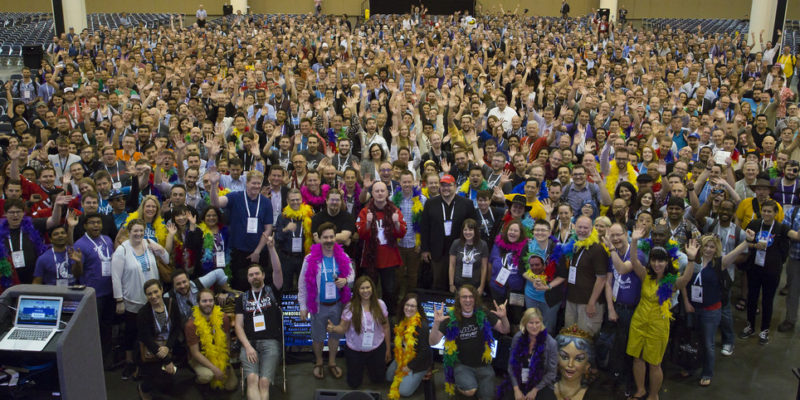
Photo Credit: DrupalCon 2016 group photo by the Drupal Association. I was there for the photo but am not visible in the picture because I am small and not in front.
Cross-posted from MomsRising.org.
I don’t know about you, but the past year has been a real wake up call for me about the importance of digital security. I used to think of hackers as bored teenagers showing off for their friends, or scammers sending viruses and spam to people by the millions. But today’s online outlaws are much more sophisticated.
Not content to just blast misleading links at us, elite hackers have started spear phishing. This is a tactic that sends an e-mail to an individual with unique, personalized information making it look very real, and convincing the user to click through to a website where they will enter their login credentials. Some hackers also use social engineering (not technology) to trick people into giving away critical information that can then be leveraged to compromise accounts.
Unfortunately, we need to worry not only about obviously sensitive information like bank accounts and e-mails, even seemingly inconsequential accounts can be exploited to provide an opening. Once a hacker gets into any of your accounts, be it iTunes, Etsy, or Pinterest, they can use that information to access other services.
The threat to our privacy is real, and we have seen that there are people who may target us and access our data not just for commercial purposes but for political use. People and organizations that are working for social change have every reason to be concerned about how our personal information, organizational data, and private communications might be used.
Good security is a pain to implement, but every inconvenience for us is an even bigger hassle for a would-be hacker. Start now from wherever you are, and make incremental changes to improve your personal and organizational security.
OK, Ruby, we’re terrified! What do we do?
There is always room for improvement of our security practices, especially as we learn more about the threats that are out there. Here are my recommendations for where to start.
More resources
Here’s your reward for making it to the end of this challenging post! Freak out and laugh and get down all at the same time with Ashley Black learning about digital security with the help of Talib Kweli and others, on Full Frontal with Samantha Bee (NSFW).
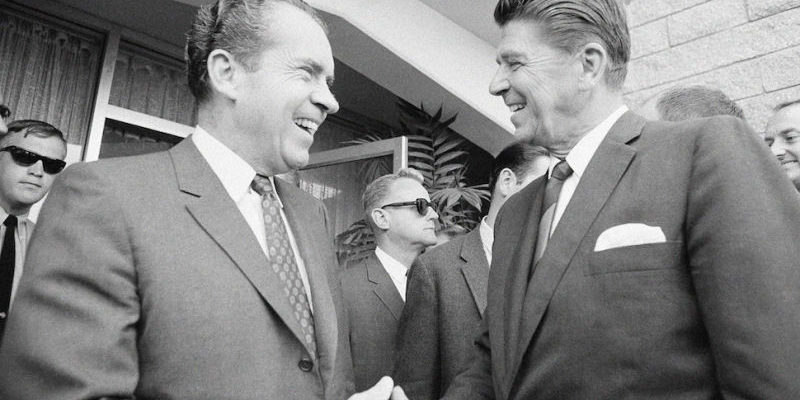
“The Nixon campaign in 1968, and the Nixon White House after that, had two enemies: the antiwar left and black people. You understand what I’m saying? We knew we couldn’t make it illegal to be either against the war or black, but by getting the public to associate the hippies with marijuana and blacks with heroin, and then criminalizing both heavily, we could disrupt those communities. We could arrest their leaders, raid their homes, break up their meetings, and vilify them night after night on the evening news. Did we know we were lying about the drugs? Of course we did.”
– Jezebel: Nixon Policy Advisor Admits He Invented War On Drugs to Suppress ‘Anti-War Left and Black People’, 3/22/17
Also, if you haven’t yet, just watch 13TH already! This story goes way back before Nixon.

‘Trump’s chief strategist, Stephen K. Bannon, has said Trump will lead a “deconstruction of the administrative state.”’
– Washington Post: Trump budget expected to seek historic contraction of federal workforce, 3/12/17
Tearing down civil society, safety nets, schools, environmental protection, while adding to the world’s largest military force.
They want us tired, hungry, lonely, and sick. They want us at each other’s throats so we won’t be at theirs. Killing the government isn’t just just an ideological goal, it’s strategic at multiple levels.

You yourself with the steady brown hands
by Kriti Sharma, February 13th, 2017
Imagine for a moment having hands on the levers of this world. Imagine not having to go through extraordinary and psychically costly effort to lovingly and very very carefully persuade someone to put down the gun. Imagine, in a swift and compassionate motion, simply taking the gun, unloading the bullets, hurling the pistol into the sea, harmless, a new home for clams.
Imagine not having to beg this tender, human male – tangle of ordinary need, knotted and luminous and deep – imagine not having to have diligently studied the blueprints of his inner labyrinth just to acquire a bite to eat. Years of careful scholarship, to know when you’ve edged too close to the closed and stubborn core, to know precisely what and how and how much you can reveal of your true person before some inner siren begins to wail in him and he is shutting down, shutting you out, and shutting the padlock on the refrigerator door.
Imagine patiently sawing open the padlock. Imagine opening the refrigerator door yourself. You – yes you, you yourself with the steady brown hands – imagine being able to open the refrigerator door, and to take what you need.
Imagine the direct path – as direct as may be possible – between here and some livable future. Imagine untwisting the line so it is a little cleaner and clearer. “Cut out the middleman,” as they say. Less energy lost to detours, more power left to be a cause in the world.
Imagine taking power. Imagine being able to do it, to be able to empty the guns and fill the refrigerators, and leave them unlocked and available to sustain everyday life. Imagine yourself the hands of the bodhisattva, skillful and steady, steering by the stars of wisdom and compassion. Imagine making mistakes, and trying again, and never giving up on your own good heart, on your bravehearted people, or on the generous earth. Imagine the enslaved ending slavery mid-sea, steering the ship as liberated beings towards a livable home.


I think he’s lonely.

One of my many brilliant MomsRising colleagues wrote this piece which ties together the threads of surging racism and gun violence in this Trumpist era. She makes it clear why an intersectional approach that encompasses multiple issues at once is required for gun safety advocates to effectively fight the NRA, who works for gun manufacturers and now for the President.
By advocating not only for gun safety but civil rights and racial justice, the GVP community will find the voice it needs to engage immigrants and let them know that smarter gun laws would help make their communities safer, and it will finally show the Black and Brown communities that GVP truly is about saving lives and not just about controlling firearms. The Trump Presidency is an opportunity to build these bridges and finally achieve the broad, diverse coalition gun safety advocates need when the balance of power in Washington finally changes and the chance arrives for true gun policy reform.
– Civil Rights Is Now a Gun Safety Issue: Hate and Guns in Trump’s America, by Gloria Pan 3/03/2017
This is all public information, fully sourced. Can we please stop acting like we don’t know what’s up? https://www.sutori.com/story/trumputin